












Export-ready is a phrase factories use about themselves long before it is true. It usually means "we have shipped abroad once". To a buyer, it means something stricter and far more useful: that they can place an international order with you and tick every box their compliance team needs without chasing you for documents. The good news is that the list is short and finite. Work through it and you stop losing orders at the paperwork stage.
The certificates buyers expect
Three names come up again and again, and serious buyers treat them as the entry ticket rather than a bonus.
BSCI and SEDEX cover the social audit: working conditions, hours, pay, and safety. A European or North American brand usually cannot place an order without a recent one, because their own law or their own buyers require it. Oeko-Tex certifies that the textile has been tested for harmful substances, which matters most for anything worn next to skin or made for children. Depending on your market you may also need GOTS for organic claims.
If you hold none of these yet, start with the social audit. It opens the widest set of buyers and is the one most often demanded before a first order. This is also exactly what buyers look for when they check you out, as we covered in how buyers vet apparel manufacturers.
The documents that move a shipment
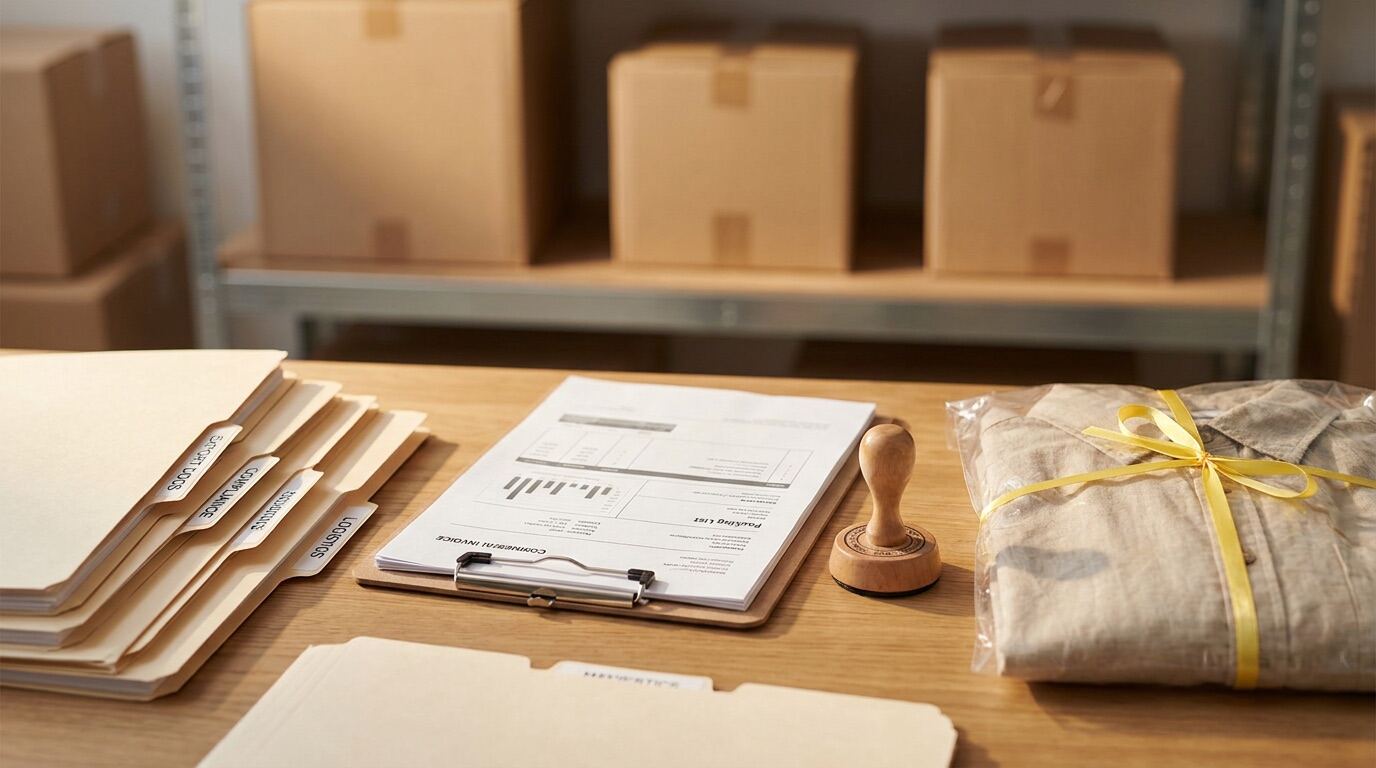
Certificates get you the order. Documents get the goods out of the country and through customs. Being export-ready means you can produce these without a scramble:
- A commercial invoice and packing list that match the order exactly.
- A certificate of origin, plus any preference document your market needs, such as a REX declaration for duty-free access to the EU.
- A bill of lading or air waybill from your freight forwarder.
- Any inspection or test report the buyer asked for in the contract.
A factory that hands over a clean document set on the first try earns a reputation that brings repeat orders. One that gets a shipment held at customs over a mismatched invoice rarely gets a second chance.
Know your incoterms
Incoterms decide who pays for what and who carries the risk at each step. Quoting the wrong one, or not knowing the difference, makes you look like a first-timer and can quietly cost you margin.
Most apparel deals settle on FOB, where you deliver the goods loaded at your port and the buyer takes over from there. Some buyers want EXW, where they collect from your factory gate, and some ask for CIF, where you arrange and pay freight and insurance to their port. You do not need to be a logistics expert. You do need to quote the right term, know what it includes, and not promise DDP delivery to a buyer's warehouse unless you genuinely understand the duties involved.
On Lalaaji, your certificates and verification sit on your profile, and payment is protected through delivery, so an export buyer can commit with confidence. See how payment protection works.
Price like an exporter
Export-ready pricing accounts for everything between your floor and the buyer's port: packaging for sea freight, inland transport, documentation, and the term you quoted. A price that looks great EXW and then balloons once freight is added makes the buyer feel misled. Quote the full picture once, honestly, and you avoid the renegotiation that kills trust.
Getting export-ready is the work that lets you reach the best markets, and a complete directory listing is where buyers see that you are ready. If you are aiming at Europe specifically, read how Pakistani manufacturers can win European buyers, and to put your readiness in front of buyers, start with how to find international buyers for clothing.
Ready to show buyers a fully export-ready profile? List your factory on Lalaaji.