












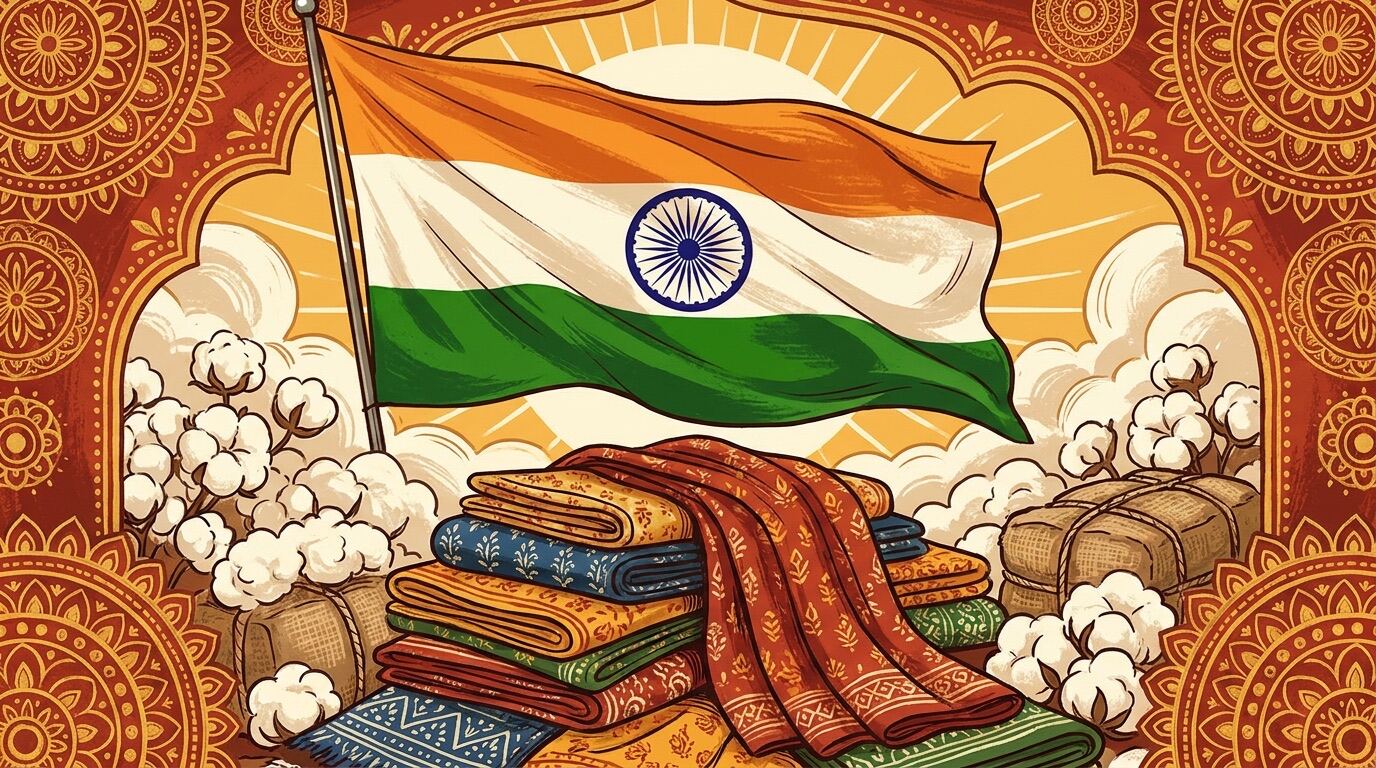
India has something most apparel exporters can only buy in: the whole chain. The cotton grows in India, the yarn is spun in India, the fabric is woven or knitted in India, and the garment is sewn in India. That vertical integration is a genuine advantage, and a recent trade deal has just made it pay off faster in one of the markets that values it most.
The India-UK deal removed the tariff
The India-UK trade agreement that took effect in 2025 eliminates duty on nearly all Indian textile and apparel exports to the United Kingdom. Before the deal, those goods carried roughly eight to twelve percent duty, the same band that suppliers from many other countries still pay. A British buyer now lands Indian product noticeably cheaper than before, and cheaper than from a supplier outside the deal. If you sell to the UK, or want to, this is the moment to lead your pitch with it and show the buyer the per-unit saving. Talks aimed at similar access to the wider European Union are moving in the same direction, so the advantage is likely to widen.
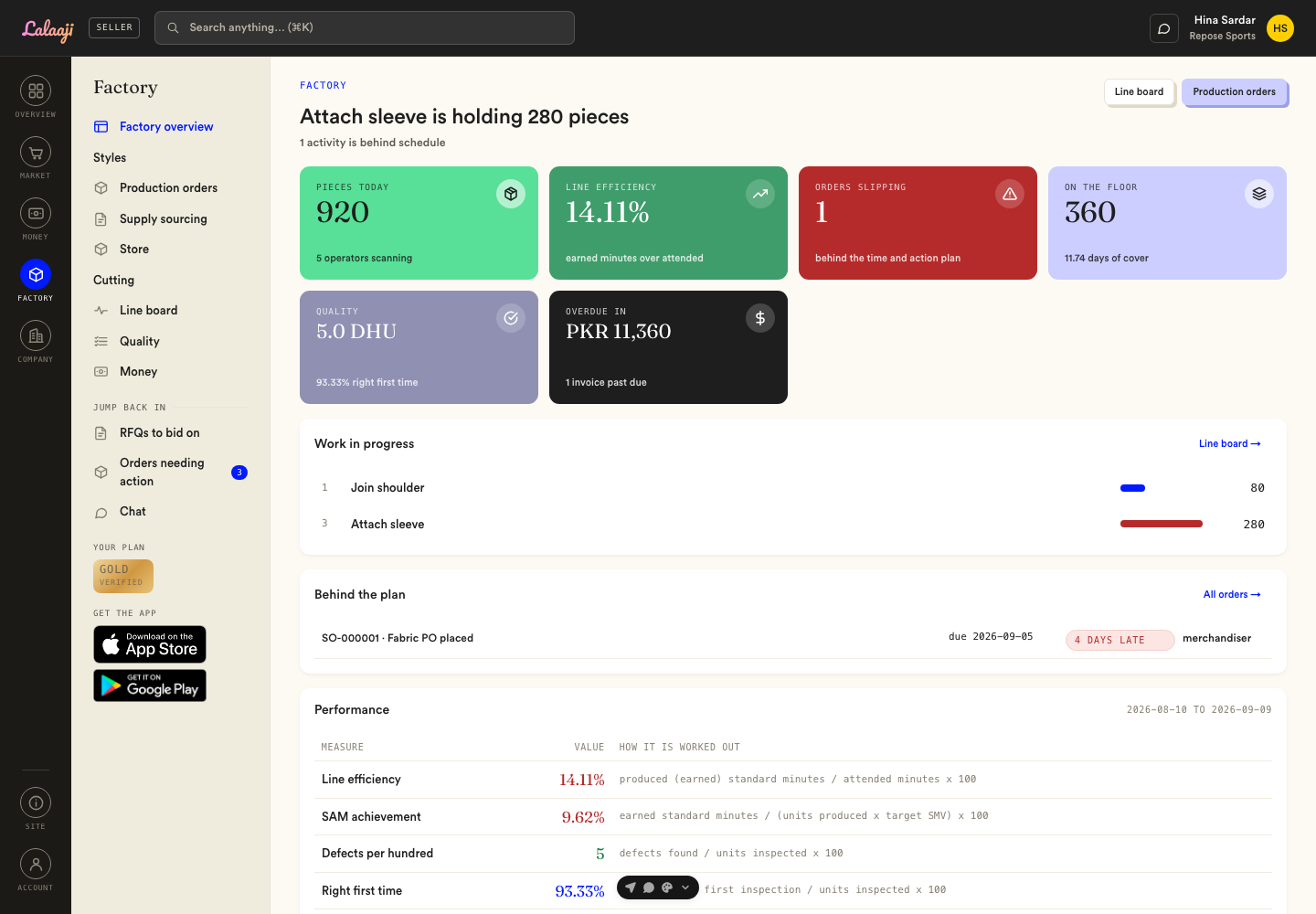
On Lalaaji, UK and European buyers post what they need and verified factories respond. An Indian factory that can quote duty-free into the UK, with the origin paperwork ready, has a clear edge. See how RFQs reach sellers.
Own your raw material story
Because India controls the chain from fibre up, it can do something cut-and-sew countries cannot: offer credible organic and recycled cotton with the certification to prove it. India is one of the largest sources of GOTS-certified organic cotton in the world. UK and European buyers pay attention to that, and many now require it. If you can trace your cotton and back it with GOTS or Oeko-Tex, that is a selling point a Bangladeshi or Vietnamese cut-and-sew factory has to source in from elsewhere. Make it part of every quote.
Sell the craft, not just the price
India's other edge is the work itself: embroidery, block printing, hand finishing, intricate detailing, and a long tradition in home textiles. These are exactly the orders that do not move to the lowest-cost factory, because they need skill the lowest-cost factory does not have. If your workshop does this well, target the buyers who need it rather than competing on plain basics where scale players win. Smaller, higher-value runs suit Indian strengths better than a race to the bottom.
Be export-ready and be found
The trade advantage and the craft only convert if a buyer can find you and trust you. Have your certificates, audits, and real product photos on your profile. The full checklist is in what it takes to be an export-ready apparel manufacturer, and the practical steps for reaching overseas buyers are in how to find international buyers for clothing. A neighbour facing a very different trade situation is worth understanding too, in Bangladesh after LDC graduation.
Want UK and European buyers to find your factory, your cotton story, and your duty-free edge? List your factory on Lalaaji.