














There are two ways to get an order. You can go out and find a buyer, convince them they have a need, and persuade them to choose you. Or you can answer a buyer who has already decided what they want and is asking who can make it. The first is a push. The second is a pull. For a factory, the pull wins almost every time, and the request for quotation is how you turn it on.
What an RFQ actually is
A request for quotation, or RFQ, is a buyer's brief. It usually contains the product, the fabric or material, the quantity, the target price, and the delivery window. Instead of you guessing what a buyer might want, the buyer hands you the spec and asks for a price and a timeline.
The important word is asks. The buyer started the conversation. They have a budget and a deadline. You are not interrupting their day to sell something they were not thinking about. You are answering a live requirement from someone ready to act.
Why pull converts better than push
When you cold-email a buyer, you are fighting three things: their attention, their existing suppliers, and their doubt that you are real. When you answer an RFQ, all three are already handled. The buyer is paying attention because they posted the brief. They are open to new suppliers because they asked publicly. And on a platform that verifies factories, your legitimacy is established before you say a word.
The result is a reply rate that outbound cannot touch. A handful of good RFQ responses a week will keep a factory busier than a thousand cold emails. Our how we work page shows the full path from a posted brief to a paid order, and we made the wider case for inbound in lead generation for apparel manufacturers.
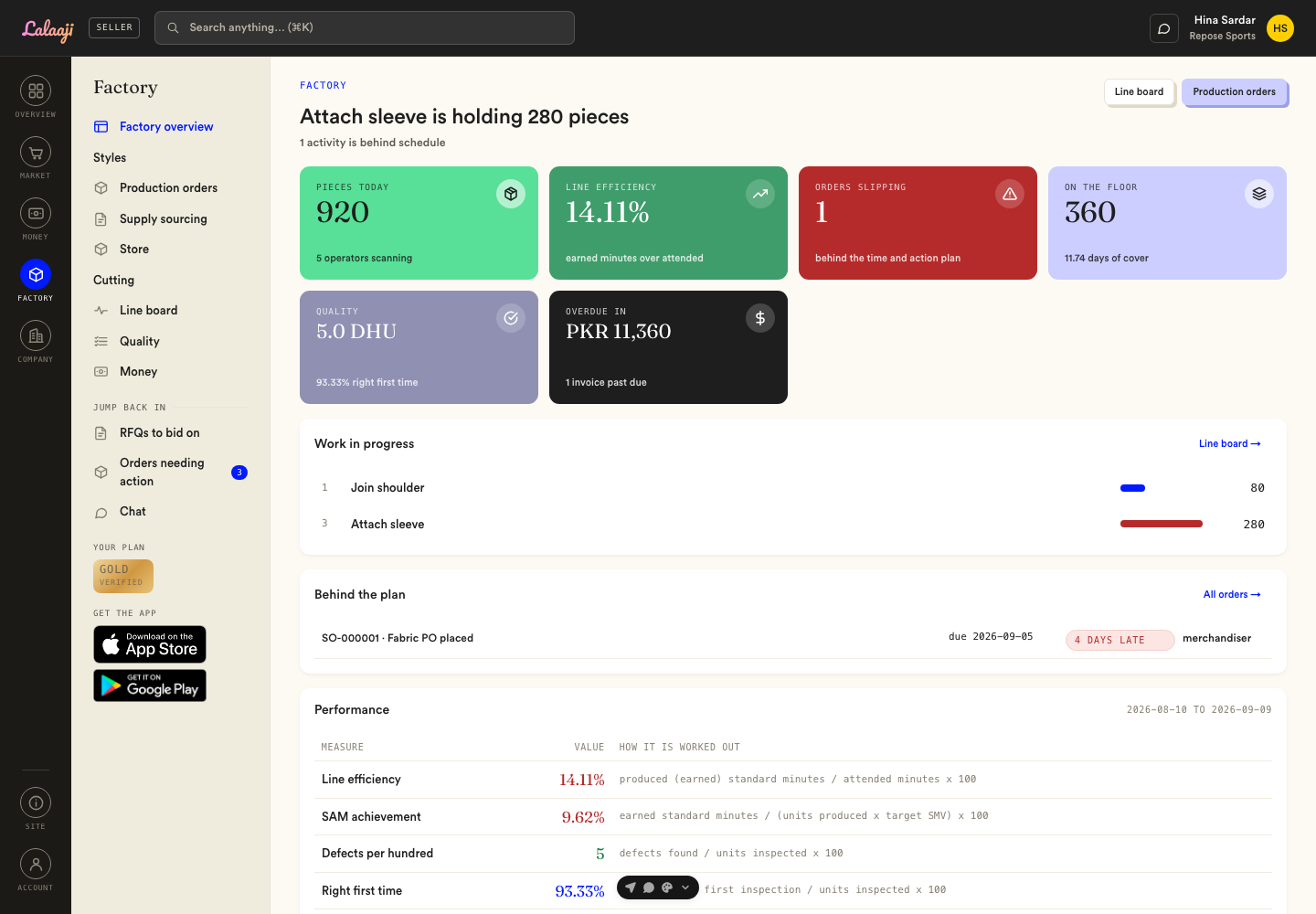
On Lalaaji, buyers post RFQs and verified factories bid on the ones they can make. You see the full brief before you spend a minute on it. See how RFQs reach sellers.
How to win the bid
Getting the RFQ in front of you is half the work. The bid wins or loses the order. A few things separate the factory that gets the sample request from the ones that get ignored.
Answer fast. The buyer is reading bids as they arrive, and the early, specific ones set the reference point everyone else is judged against. Quote a real price, not a placeholder you plan to revise later, because a number you walk back reads as a number you made up. Match the brief exactly: if they asked for 240 GSM, do not quote 200 and explain why later. And add one piece of proof, a photo of similar work or a relevant certificate, so the buyer can see you have done this before.
Only bid on what you can make
The pull model rewards focus. Bidding on every RFQ that floats past, including the ones outside your range, wastes your time and trains the platform's buyers to distrust your quotes. Bid on the briefs that match what you already do well, and your win rate climbs while your effort drops.
Buyers are checking you while you check the brief. Make sure you pass their test by reading how buyers vet apparel manufacturers before your next bid.
Want buyer briefs delivered to you instead of chasing leads? List your factory on Lalaaji and start bidding on RFQs that fit your line.