















Alibaba works. That is not in question. The problem for a clothing manufacturer is that it works for everyone, which means your listing sits next to forty thousand others that look almost identical. When a buyer cannot tell two factories apart, the only thing left to compare is price, and a race to the lowest price is not a business you want to win.
There are other places to list a factory, and some of them are built for sellers rather than for the platform's ad revenue. Here is an honest look at the alternatives and what each one is good for.
What you are actually paying for
Before comparing names, it helps to be clear about what a marketplace owes a manufacturer. You want three things. Buyers who are real and ready to order. A way to stand out that is not just paying for the top ad slot. And protection so you get paid for the work you ship. If a platform gives you traffic but no protection, or protection but no buyers, it is only half a tool.
General B2B marketplaces
Made-in-China, Global Sources, and IndiaMART sit in the same category as Alibaba. They are broad, they carry every product type, and they bring volume. The catch is the same everywhere. Volume without filtering means most enquiries are not serious, and you spend your day replying to students, resellers, and competitors. They are worth keeping a listing on, but do not expect them to qualify buyers for you.
Apparel and textile specialists
Foursource and Fibre2Fashion narrow the field to clothing and textiles. A buyer landing there is already in your industry, so the conversation starts further along. The trade-off is smaller reach and, on some of them, an interface that was clearly designed for buyers first. We compared these directly in B2B apparel sourcing platforms for sellers.
Demand-led marketplaces
The most useful shift in the last few years is platforms where buyers post what they need and factories respond, rather than factories posting and hoping. Instead of one more listing in a sea of listings, you answer a brief from a buyer who has already decided to source. The fit is better and the reply rate is higher because the buyer asked first.
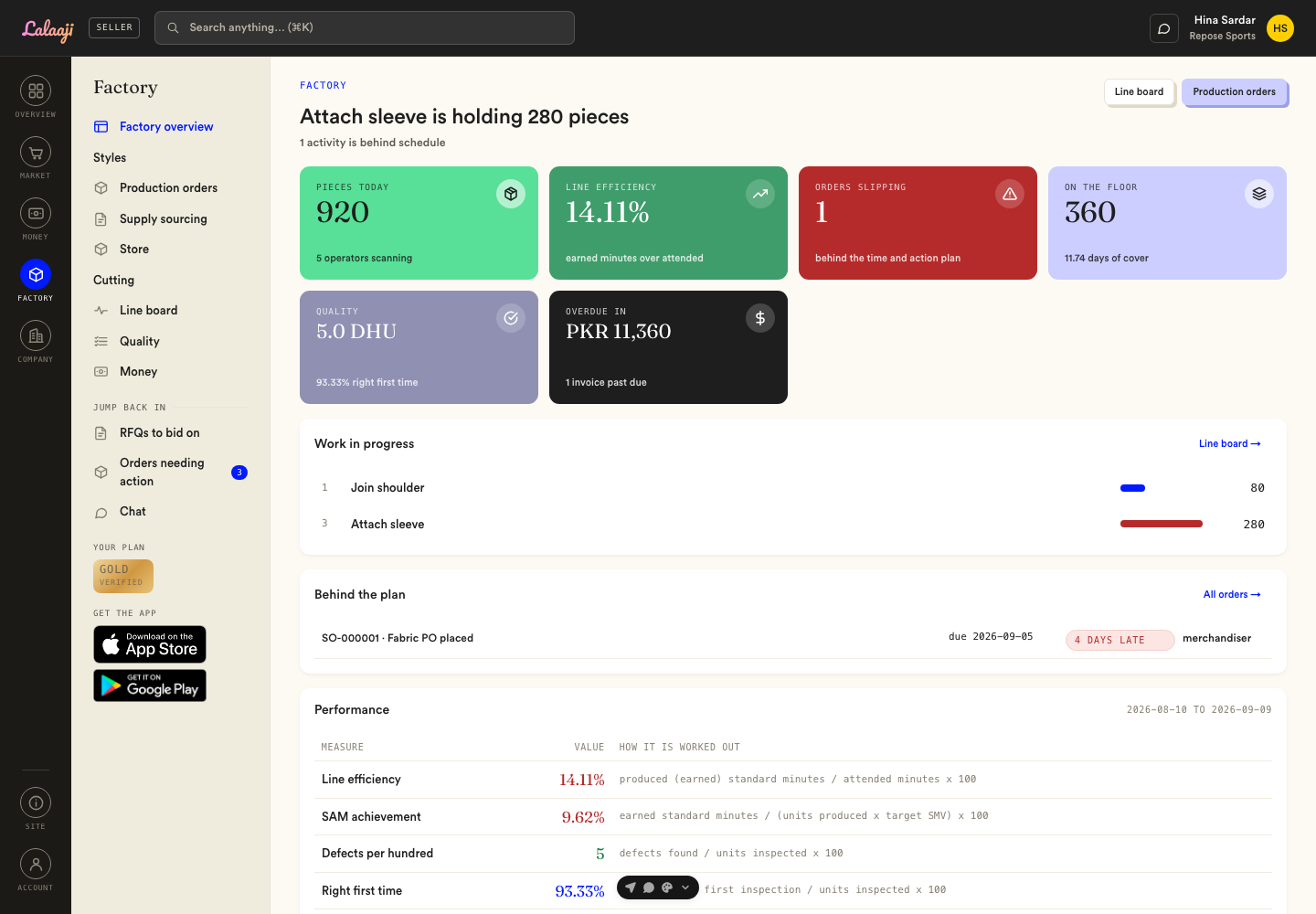
This is the model Lalaaji is built on. Buyers post requirements, verified factories bid, and the platform handles trust and payment around the deal. Our how we work page walks through the full flow, and if the request for quotation idea is new to you, here is how the pull model works.
Lalaaji verifies both sides before money moves and holds buyer funds until you deliver, so a new buyer is not a leap of faith. See how buyer protection works.
How to choose without spreading yourself thin
You do not need to be on every platform. Two is usually right. Keep one broad listing for reach, and put your real effort into one specialist or demand-led platform where buyers are closer to ordering. Track where your actual orders come from after three months and drop whatever only brought tyre-kickers.
Whatever you choose, the listing itself decides whether the platform pays off. A sharp, specific profile beats a broad one everywhere. Our guide to lead generation for apparel manufacturers covers how to set yours up so enquiries are worth your time.
Want a marketplace where buyers come to you and you get paid for what you ship? List your factory on Lalaaji.