












Almost every article about sourcing platforms is written for buyers. It tells brands where to find factories. There is very little written for the factories themselves, who have to decide where to spend their listing budget and their limited time. This one is for the seller. Here is how the main platforms compare when you are the one trying to win orders, not place them.
The big general marketplaces
Alibaba is the default, and for good reason: the traffic is enormous. The cost is that you are one listing among tens of thousands, and buyers compare mostly on price. Paid placement helps, but it is a tax you pay forever to stay visible. Alibaba is worth a presence for reach, but it rarely qualifies a buyer for you. We went deeper on this in Alibaba alternatives for manufacturers.
Global Sources and Made-in-China sit in the same bracket. Broad, high volume, light on filtering. Useful as a net, not as your main channel.
The apparel specialists
Foursource focuses on apparel and textiles and connects brands with manufacturers directly. Because everyone there is in the industry, the enquiries are more relevant than on a general marketplace. The flip side is smaller reach and a model still built mainly around the buyer's search.
Fibre2Fashion is part marketplace, part industry media. It carries a B2B marketplace alongside news and a trade directory, which gives it decent visibility in search. As a seller you get exposure, though the platform spreads its attention across many functions rather than putting the deal first.
Demand-led platforms
The newer model flips the listing on its head. Instead of you posting a catalogue and waiting, buyers post what they need and you respond. For a factory this is the better shape, because every enquiry is a buyer who has already decided to source and told you the spec.
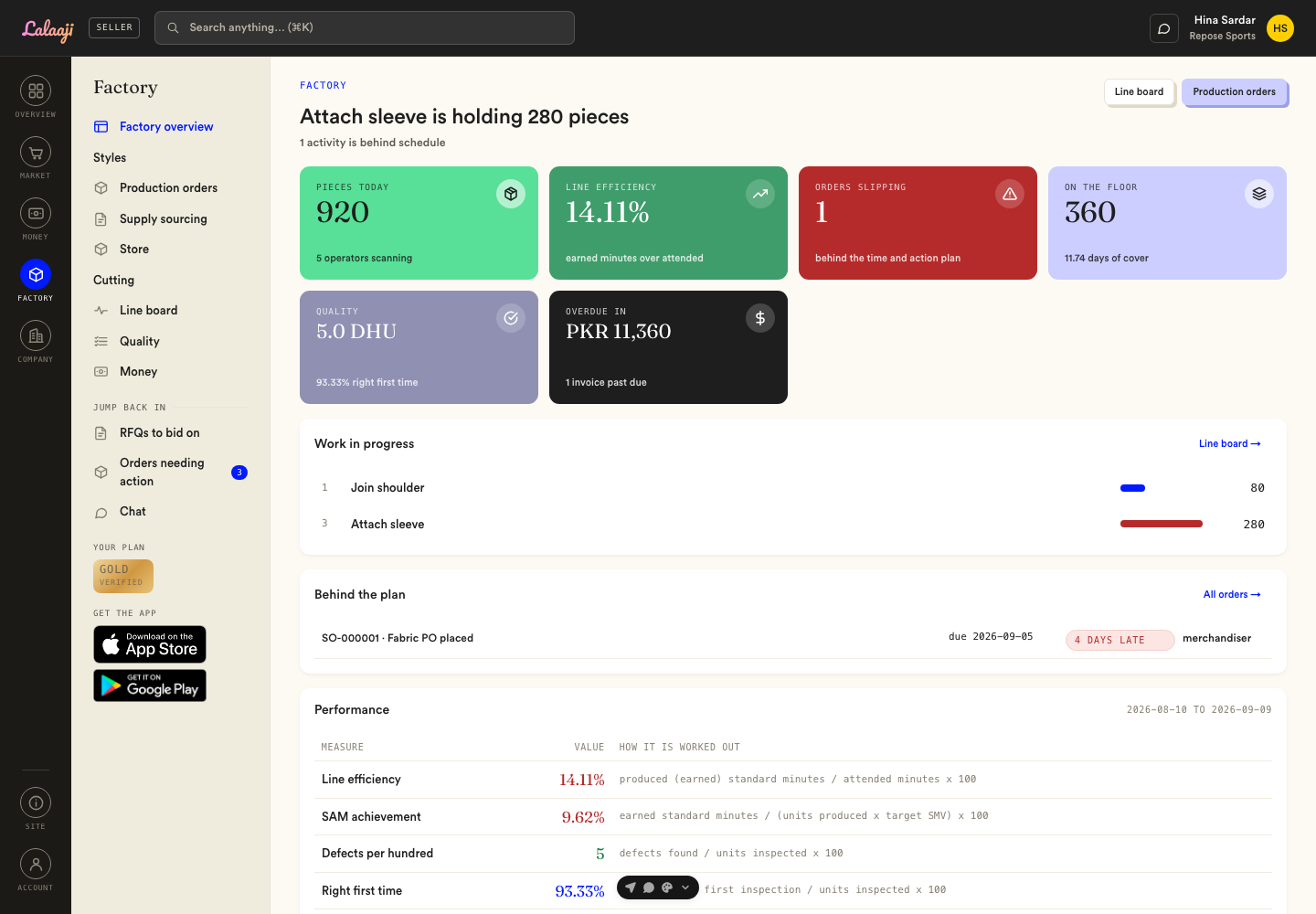
Lalaaji is built this way. Buyers post requirements as RFQs, verified factories bid on the ones they can make, and the platform handles identity verification and payment protection around the deal. The difference for a seller is that you spend your time answering real briefs instead of polishing a listing and hoping. You can see the full flow on the how we work page and browse live listings in the directory. If the model is new to you, here is how the RFQ pull model works.
On Lalaaji both sides are verified before they trade, and buyer funds are held until delivery, so a new account is not a risk for either party. See payment protection.
How to choose as a seller
Three questions cut through the marketing on any platform. Are the buyers here in my industry and ready to order, or just browsing? Can I stand out on something other than the lowest price? And does the platform protect my payment when I ship? Score each option honestly against those three and the right shortlist appears quickly.
Whichever platforms you pick, the listing decides whether they pay off. A sharp, specific profile and a fast, accurate response win orders everywhere. Set yours up using our guide to lead generation for apparel manufacturers, and for the wider picture see how to find international buyers for clothing.
Want to list where buyers come to you and your payment is protected? List your factory on Lalaaji.