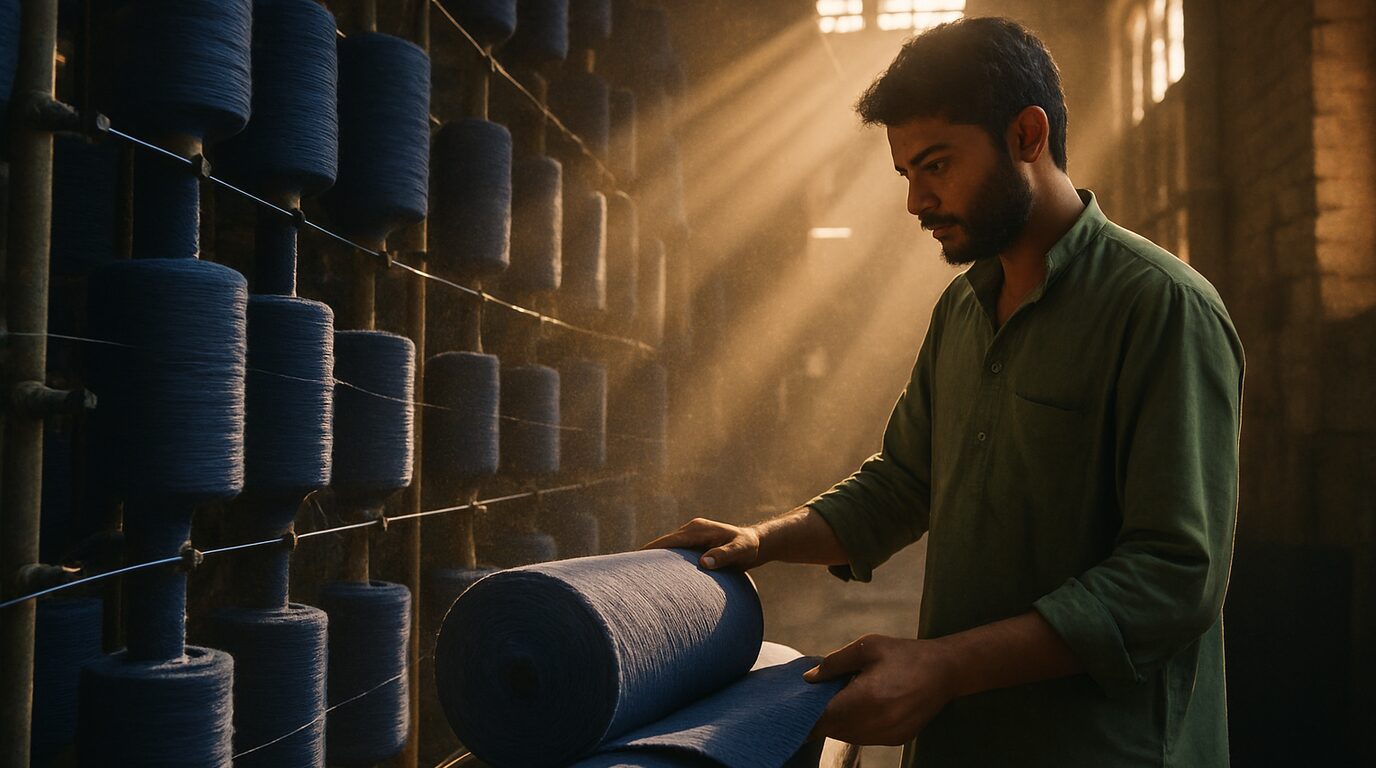












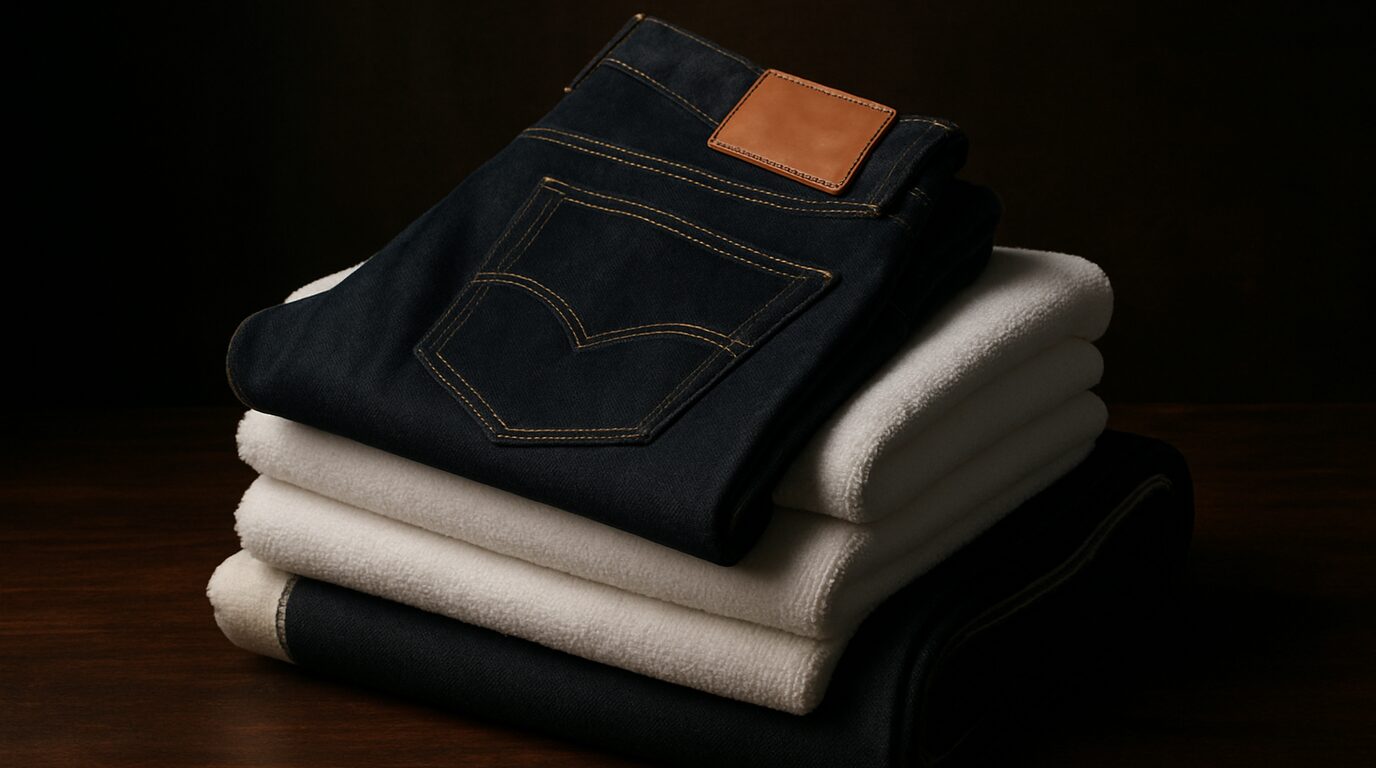
Pakistani mills should add finished garments because the margin in a pair of jeans or a fleece jacket sits in the sewing and the selling, and right now most of that margin leaves the country in a roll of fabric or a bale of towels. Pakistan exports around 18 billion dollars of textiles a year, and a large share of it is intermediate or home product: yarn, greige and finished denim fabric, bed linen, towels. The country grows the cotton, spins it, weaves it, and then watches a factory in Turkey or Bangladesh turn it into the garment that carries the brand label and the price. That is a strange place to stop.
Where the money is in a pair of jeans
Take a mid-market pair of jeans that retails in Europe for 60 euros. The denim in it costs the garment maker a few dollars, roughly 4 to 7 depending on weight and width. The finished, washed, labelled pair leaves the factory at roughly 8 to 15 dollars depending on wash and trims. A Pakistani mill that sells the fabric earns the first number. A Pakistani factory that sells the finished jean earns the second, and it owns the relationship with the brand, which is where repeat orders live. The fabric supplier is replaceable every season. The garment supplier who hit the fit and the wash is not.
The same logic applies to home textiles. A Faisalabad towel group already runs dyeing, finishing and stitching lines. The distance from a hotel towel to a towelling bathrobe, a beach poncho or a kids' hooded towel is a pattern and a sewing line, and those products sell at three to four times the price per kilo of cotton. The mills that have made the step, and several of the largest Pakistani groups have, made it because the fabric business had become a price war they could not win against their own neighbours.
Why now, and why Europe
Two things changed. First, the tariff picture. Under GSP+, a finished garment from Pakistan enters the EU at zero duty, while the same garment from China pays 12% and from Vietnam pays a rate still stepping down. A European denim brand that has been buying Pakistani fabric and sewing it in a country without that preference is paying duty it does not need to pay. Show them the sum. Second, the buyer's mood. Brands spent the last few years pulling orders out of China and looking for a second country that can do denim properly, and there are only a handful of those. Pakistan is on every one of those lists for fabric already. Getting on the list for garments is a shorter step than it looks.
European brands post denim and knitwear briefs on Lalaaji every week, most of them for finished garments. A mill that can quote fabric and garment from the same group answers a brief its competitors cannot. See how RFQs reach sellers.
What you need that you do not have yet
A mill moving into garments underestimates the same four things every time.
- Washing and finishing. Denim garments are sold on the wash. A laundry with enzyme, stone, laser and ozone capability is a real investment, and it is the part buyers photograph.
- Pattern and fit engineering. Fabric has a spec sheet; a garment has a fit that has to hold from size 28 to 40. Hire the technician before you take the order; the first rejected sample is too late.
- Small runs and sampling speed. A European brand's first order is 1,000 to 3,000 pieces per style, sometimes less. A mill used to 100,000-metre fabric runs finds that painfully small. Set up a sample room that turns a proto in ten days or you will lose the brand before the bulk order exists.
- Selling, in English, to a brand. Fabric is sold to a garment factory's merchandiser who speaks your language. Garments are sold to a product developer in Amsterdam who wants photos, tech packs and a WhatsApp reply within the hour.
The fourth point is the one that quietly kills the project. Mills are excellent at making and poor at presenting, and the European buyer decides on presentation before they ever touch a sample. The trust checklist those buyers run is in how buyers vet apparel manufacturers, and it is worth reading before the first pitch.
Keep the fabric business, sell the combination
The smart groups kept their fabric customers and now sell the combination. A brand can buy Pakistani denim, get it sewn in Turkey for the speed programme and in Pakistan for the volume programme, and the mill is in both orders. That is exactly how the larger brands now source, and we explain the pattern in dual sourcing apparel. For the mill, being the fabric behind two garment sources is a stronger position than being one of them.
What waiting costs
A Pakistani mill that stays a mill will be competing on fabric price with the mill next door for the rest of its life. The garment step is harder than it looks and more valuable than it looks, and the duty advantage into Europe is sitting there unused. Every year a group waits, a factory in another country sews its fabric and keeps the brand. The full cluster picture, and where garments from Faisalabad fit against sportswear from Sialkot, is in Faisalabad and Sialkot to Europe.
Making the step from fabric to finished garments? List your factory on Lalaaji and let European denim and home textile buyers find the whole chain in one place.
Your questions answered
Why should a Pakistani denim mill make finished jeans?
Because the fabric in a mid-market pair of jeans is worth roughly 4 to 7 dollars while the finished pair leaves the factory at roughly 8 to 15 dollars, and the garment supplier owns the brand relationship that produces repeat orders. Finished garments from Pakistan also enter the EU at zero duty under GSP+.
What does a mill need to add before it can sell finished garments?
A washing and finishing laundry, pattern and fit engineering, a sample room that turns a prototype in about ten days for small first orders, and a sales function that can present to European brands in English with photos and tech packs.
Can a mill keep selling fabric while also selling garments?
Yes, and the strongest position is selling the combination: the mill supplies the fabric to a brand's fast source in Turkey and sews the volume order itself, so it sits inside both halves of a dual-sourced programme.