












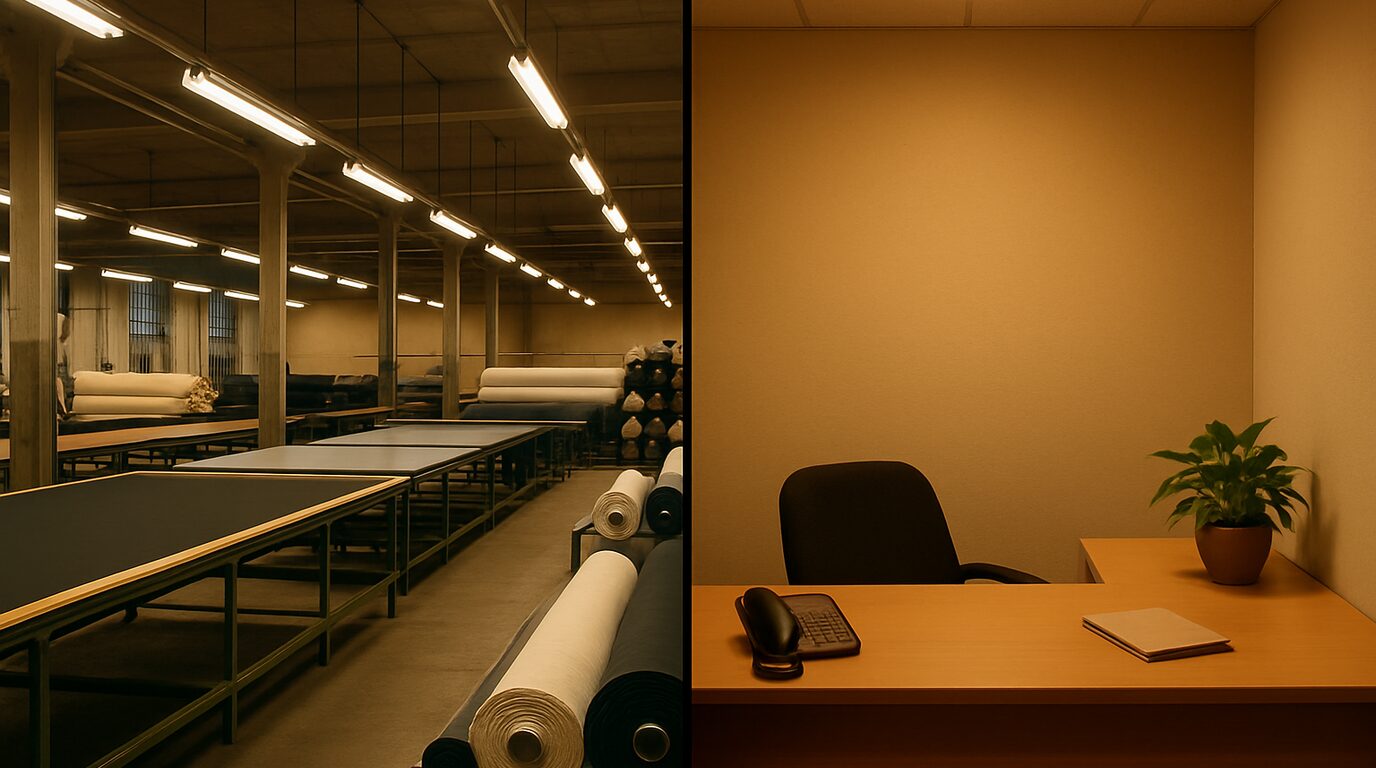
A factory owns sewing machines and the people who run them. A trading company owns a phone book of factories and takes a margin for connecting you to one. You can tell them apart in one video call, if you know what to ask: a factory can walk you onto its own floor, name its line count and daily output without hesitation, and show you the business licence that says manufacturing. A trading company will steer the conversation back to price and samples. Neither is a scam, but paying a trading margin while believing you are paying a factory price is a bad deal, and it happens to European brands every week.
Why it matters which one you are talking to
The margin is the obvious reason. A trader typically adds 10% to 25% on top of the factory's price, and on a programme of a few thousand pieces a season that is real money you could have spent on fabric. The less obvious reason is control. When you approve a sample with a trader, the factory that sews the bulk may be a different one from the factory that sewed the sample, and you will not know until the bulk arrives. When the delivery slips, the trader is negotiating with the factory on your behalf, and you are two steps from the person who can fix it. A brand that has been burned by "sample great, bulk terrible" has almost always been buying through a layer it did not know was there.
There is a fair case for traders. If you buy ten different products in tiny quantities, a trader who consolidates across factories saves you ten relationships. For a brand building a programme with one or two core suppliers, the layer costs more than it gives.
Six ways to tell a factory from a trading company
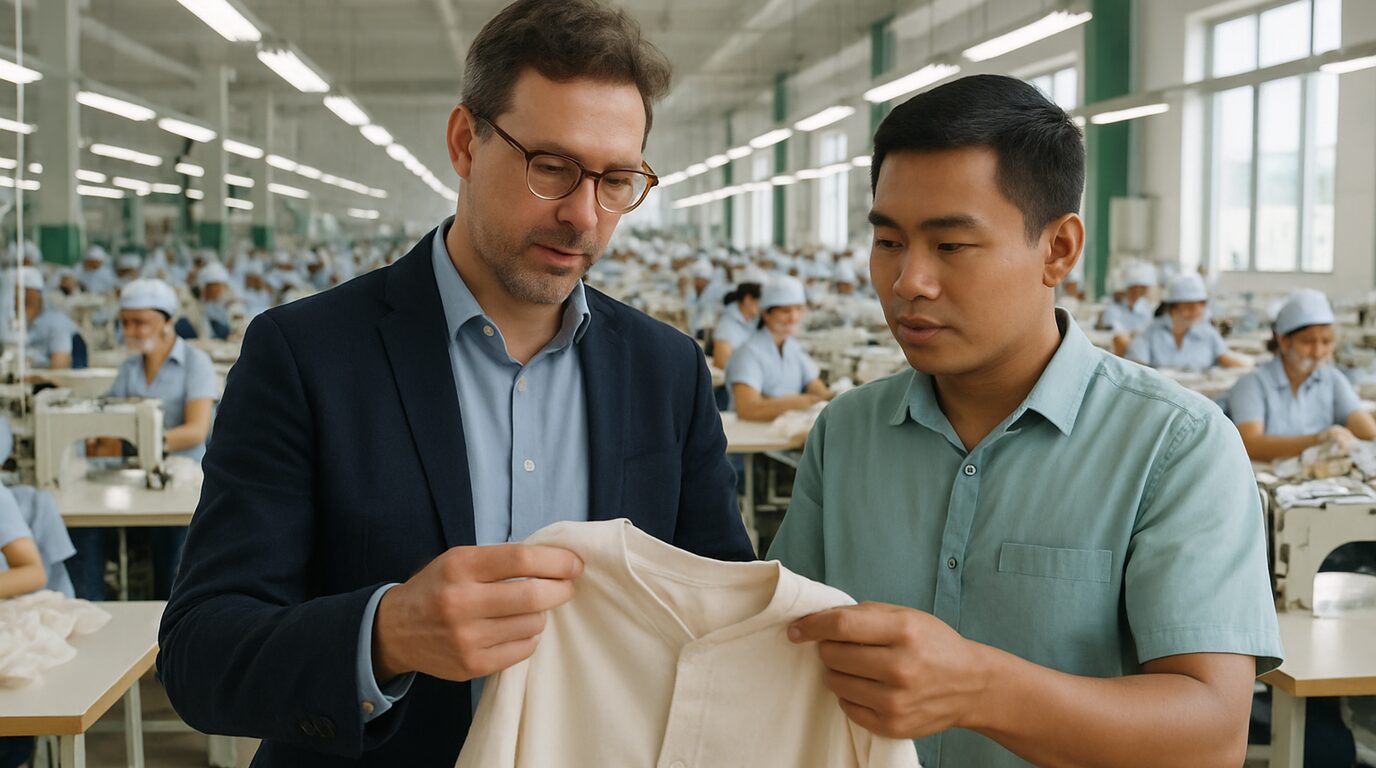
Ask for a live video walk of the production floor, unannounced, during working hours. A factory owner is proud of the floor and will do it the same day. A trader will offer photos, a pre-recorded video, or a visit "next week when the manager is back". Then look at the business licence. In China the registered business scope lists what the company may do, and a trader's will say trading, import and export, or sales with no mention of production. In Vietnam, Pakistan, and Turkey the registration documents and the tax number tell the same story, and a factory will also have a social compliance audit, a BSCI or SEDEX report, addressed to its own premises.
Next, ask questions only a factory can answer instantly. How many sewing lines do you run? What is your daily output on a basic tee? Which machine do you use for flatlock seams? A factory answers in numbers and model names. A trader says "we have many capabilities" and promises to check. Ask for the factory address and put it into a map; if the address is an office tower in a city centre, you have your answer. Look at the product range too: a factory's catalogue is narrow and deep, because a sewing floor is set up for a type of garment. A catalogue with denim, swimwear, down jackets, and school uniforms all at once is a trader's catalogue. And ask who pays the workers. It sounds blunt. It is the fastest question there is.
The hybrid cases
Real life is messier than the two labels. Many factories run a trading arm that fills their own lines first and subcontracts the overflow, so you may start as a factory customer and become a subcontracted one in peak season without being told. Some traders own a minority stake in a factory and call themselves the manufacturer. And some of the best partners a small brand can find are vertical factories that knit or weave their own fabric and sew it, which is a factory with a mill attached, nothing to do with trading. The question to settle in every case is the same: where exactly will my bulk be sewn, and can I see that place?
Lalaaji verifies the business behind every seller profile before it can bid, so a buyer sees a checked factory with its real premises, and a trading company is labelled as one. How know-your-partner checks work.
What to do once you know
If it is a factory, ask the questions in how buyers vet apparel manufacturers and get a sample moving. If it is a trader and the price is still good, write the subcontracting clause into the order: name the factory, require notice of any change, and reserve the right to inspect. If it is a trader pretending to be a factory, walk away, because the lie about the floor will not be the last one.
The cleanest way to avoid the whole problem is to put your brief on a platform that has already done the check. Then the quotes you compare are factory quotes, and the price difference between them means something. We explain how to write that brief in how to write an apparel RFQ that gets real quotes, and which countries to send it to in where to make your product.
Want quotes from verified factories rather than a phone book? Post an RFQ on Lalaaji.
Your questions answered
How can I tell if a clothing supplier is a factory or a trading company?
Ask for a live, unannounced video walk of the sewing floor, check whether the business licence lists manufacturing or only trading, map the registered address, and ask numeric questions like line count and daily output. A factory answers instantly; a trader deflects to price and samples.
How much margin does a trading company add in apparel?
Typically 10% to 25% on top of the factory price, depending on the product and order size.
Is it ever better to buy from a trading company?
Yes, when you buy many different products in small quantities and want one contact to consolidate them. For a brand building a programme with one or two core suppliers, the extra layer costs more than it gives.