











Dual sourcing means a brand makes the same product, or the same programme, in two countries at once, so that a tariff change, a port strike, a flood or a factory failure in one of them does not stop the shipment. It became standard practice for large apparel brands during the tariff and freight chaos of the early 2020s, and it has now reached the mid-size brand with a single trusted supplier and a nervous feeling about it. For factories, it changes what winning an order means: the prize is one of the two seats a brand keeps, and that is a different game, in most ways an easier one.
Why brands split orders
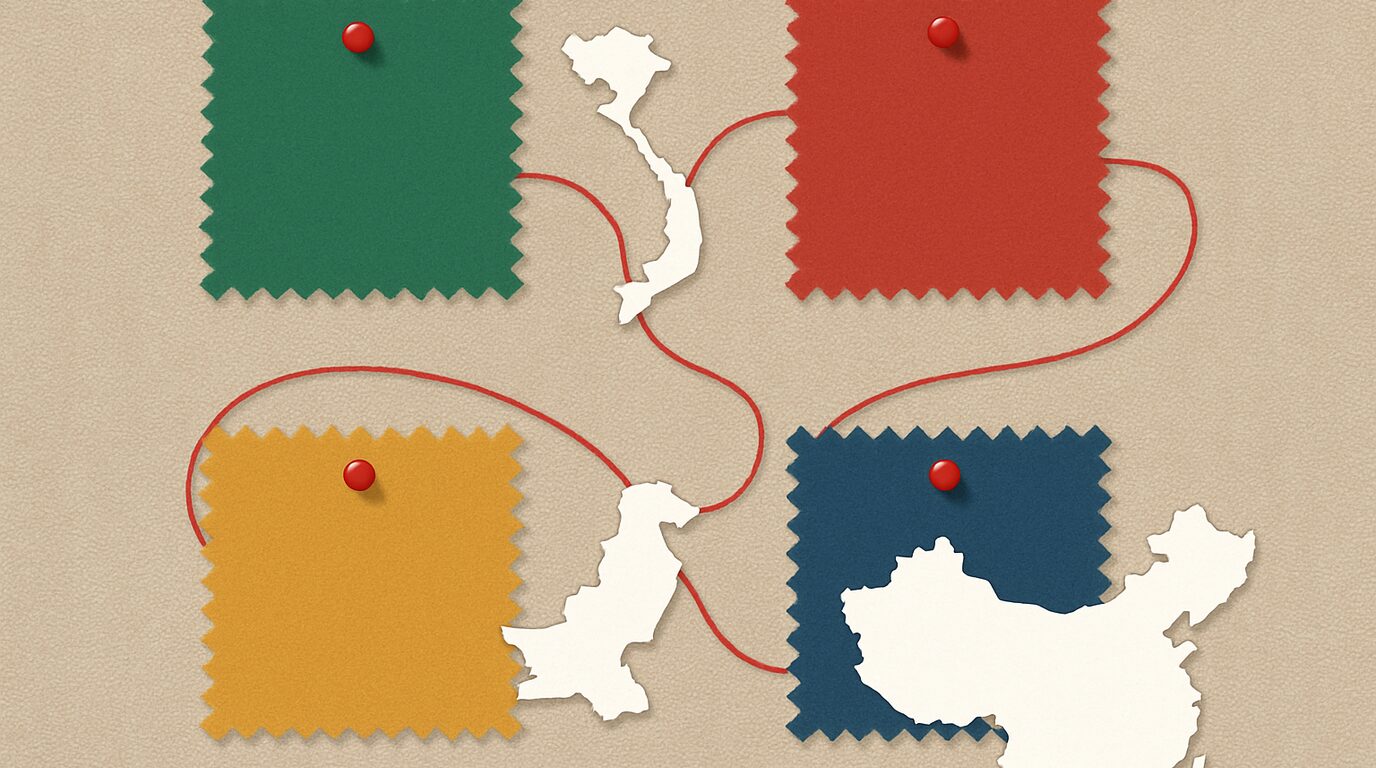
The simple answer is that a single supplier is a single point of failure, and the last five years showed every brand what that costs. The more useful answer is that the two countries are usually chosen to do different jobs. One is fast and close, one is cheap and deep. A European denim brand puts the trend-led, mid-season and replenishment styles in Turkey, four days by truck and duty-free under the Customs Union, and the core, forecastable volume in Pakistan or Vietnam, where the fabric base is deeper and the price is lower. Neither country could do the whole programme as well as the pair does it together.
| Pair | Fast and close | Volume and depth | Typical split |
|---|---|---|---|
| Denim | Turkey (Customs Union, 4 to 6 day truck) | Pakistan (GSP+, own fabric) | 30/70 to 50/50 |
| Activewear | Turkey or Portugal | Vietnam (EVFTA) or Sialkot | 20/80 |
| Knit basics | Turkey | Pakistan or Bangladesh | 20/80 |
| Outerwear and technical | China (fabric depth, speed) | Vietnam (duty, diversification) | 40/60 |
What the split does to the price conversation
A brand that dual sources compares your quote against the cost of having no second source, which after one lost season it has usually measured, and that is a far kinder benchmark than the cheapest factory in the world. That gives the slower or pricier country a margin of tolerance it never had when it was competing for the whole order. A Turkish factory only has to come close enough to a Pakistani price that the speed is worth the difference on 30% of the volume, and that is a bar it clears easily. A Pakistani factory only has to be reliable and cheap on the 70% that was forecast six months out.
Just as no serious company runs its website on one server any more, no serious brand wants its autumn range in one country. The second server only has to be up.
Buyers on Lalaaji often post the same brief twice, once for the fast source and once for the volume source, and award both. See how RFQs work.
How a factory wins its half
The buyer's first question about a second source is whether the two factories can make the same garment. That sounds obvious and it is where most pairs fail. Different fabric batches, different pattern interpretations, different wash recipes, and the customer on the shop floor sees two products under one label. A factory that wants to be a dual source therefore sells consistency with the other source, which can mean sourcing the same fabric, working from the buyer's graded pattern, matching a lab dip the other factory already approved, and swallowing your pride about it. The factory that says "send us the approved sample from Turkey and we will match it" gets the order. The factory that insists on its own way is politely dropped.
The second question is capacity honesty. A brand splitting 20,000 pieces does not want a second source that quietly needs the whole 20,000 to be worth its time. Quote the volume you are actually being offered and be straight about what you can add if the other source fails. That last part is the real product. The buyer is buying the option to move the order, and an honest number is worth more to them than an optimistic one. The checklist buyers run before they trust either factory is in how buyers vet apparel manufacturers.
How a buyer sets it up without doubling the work
Brands that try dual sourcing for the first time usually make one mistake: they run two separate developments, with two tech packs, two sample rounds and two approval chains, and then wonder why it costs twice as much. Run one development. Approve one sample, one fit, one lab dip, one wash standard, and send the approved package to both factories with the same tech pack and the same measurement tolerances. Split the purchase order, not the product. The guide to writing an apparel RFQ covers what that single package needs to contain, and where to make your product by category and order size helps pick the pair.
What this means for you
Dual sourcing is what a supply chain looks like once the people running it have been burned, and it will outlast every trend that gets written about it. For a brand it costs a little more per piece and removes the scenario that ends the company. For a factory it means the order you are chasing is probably half of a programme, and the way to win it is to be the easier half to work with. The mills in Pakistan already sit inside both halves of many denim programmes, as the fabric, and we explain what they should do with that position in why Pakistani denim and home textile makers should add finished garments.
Setting up a second source for a programme you already run? Post the brief on Lalaaji and get quotes from verified factories in Turkey, Pakistan, Vietnam and China side by side.
Your questions answered
What is dual sourcing in apparel?
Dual sourcing is when a brand makes the same product or programme in two countries at the same time, usually pairing a fast, nearby source such as Turkey with a lower-cost, high-capacity source such as Pakistan or Vietnam, so a disruption in one does not stop the shipment.
How do brands split orders between two countries?
Typical splits run from 20/80 to 50/50, with the fast source taking trend-led, mid-season and replenishment styles and the volume source taking forecastable core styles. The brand runs one development and approves one sample, then splits the purchase order across both factories.
How does a factory win a dual-sourcing order?
By matching the other source: working from the buyer's approved sample, pattern and lab dip, quoting the volume actually on offer, and being honest about the extra capacity it can add if the other factory fails.