











An apparel RFQ gets real quotes when a factory can price it without asking you a single question. That means the product, the fabric, the quantity, the sizes, the packing, the delivery date, and the Incoterm are all on the page, in numbers, in one place. Most briefs we see fail that test. They say "premium hoodie, good quality, 500 pieces, best price", and the replies they get are exactly as vague as the question. Here is what to write instead.
Why most RFQs get bad quotes
A factory reading your brief is doing arithmetic. Fabric consumption times fabric price, plus trims, plus minutes of sewing at their labour rate, plus packing, plus margin. Every field you leave blank is a number they have to guess, and a factory that guesses low to win the order will correct it later, usually after you have approved a sample and lost six weeks. A factory that guesses high loses the order to the one that guessed low. Either way the quote you receive tells you very little about the price you will pay. A complete brief fixes that in one move, because every factory is now pricing the same thing and their numbers become comparable.
A builder gives nobody a fixed price for "a nice extension". A plan with dimensions gets one the same afternoon, and a factory works exactly the same way.
What a complete apparel RFQ contains
Copy this list into your brief and fill in every line. If a line genuinely does not apply, write "not applicable" so the factory knows you considered it.
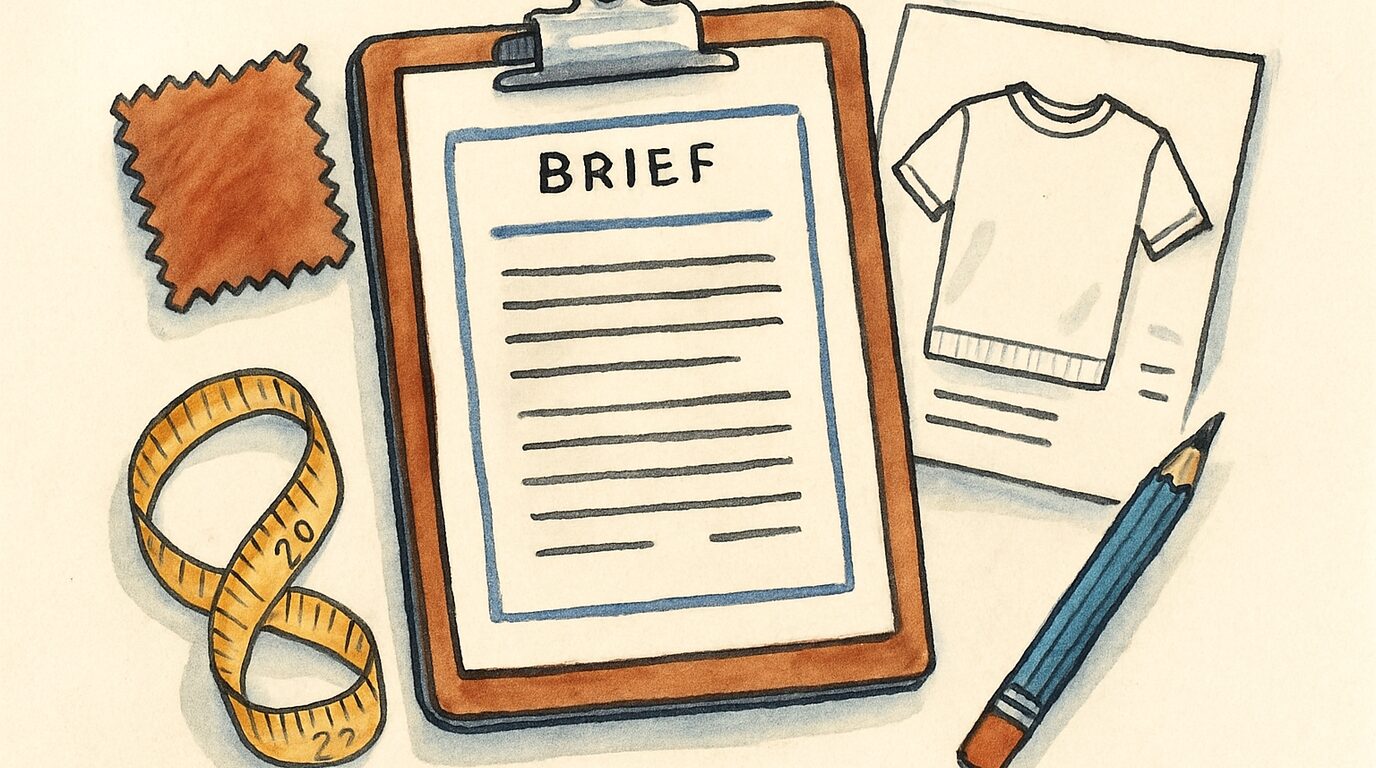
- Product and reference: garment type, a style name or number, and a tech pack or at least front and back sketches with measurements. A photo of a comparable product helps but does not replace measurements.
- Fabric: composition, weight in GSM, construction (single jersey, French terry, 12 oz denim, 20D ripstop), finish, and colour references in Pantone or a swatch.
- Trims and branding: labels, hangtags, zips, buttons, prints or embroidery with placement and size, and who supplies each item.
- Quantity and size breakdown: total pieces per style and per colour, plus the split across sizes. "2,000 pieces, S to XL, ratio 1:2:2:1" is enough.
- Quality requirements: the standard you will inspect against, any tests (shrinkage, colourfastness, pilling), and certifications you require such as Oeko-Tex or GOTS.
- Packing: folded or hung, polybag type, carton count, and any retail-ready requirements such as barcodes and size stickers.
- Delivery: the date you need the goods, where, and the Incoterm you want the price on (FOB the factory's port is the sane default; ask for EXW as well if you want to compare).
- Samples: whether you want a proto, a fit sample, and a pre-production sample, and who pays for them.
- Payment terms you can offer: a deposit and balance split, and whether you will pay through a platform that holds funds until delivery.
- Target price, if you have one: optional, and it cuts both ways. It stops factories that cannot get close from wasting your time, and it anchors everyone else to your number.
The three fields people always leave out
Fabric weight is the first. "Cotton hoodie" covers everything from a 240 GSM summer piece to a 480 GSM heavyweight, and the fabric cost between those two more than doubles. Size ratio is the second, because a factory buys fabric by the metre and an XL consumes far more than an S; a brief without the ratio gets a quote that assumes a cheap ratio. The Incoterm is the third, and it is the one that makes comparison impossible. An EXW quote and an FOB quote for the same garment can differ by 30 to 50 cents per piece, and neither factory has done anything wrong. Name the Incoterm and the port. Then every number means the same thing.
Lalaaji's RFQ form asks for each of these fields, so the brief reaches factories complete and the bids come back in one comparable format. See how the RFQ works.
How to write the brief so factories want it
A good brief is also a piece of marketing to the factory, because a factory with a full order book chooses which RFQs to answer. Say who you are in two sentences, with a website, and whether this is a one-off or the first of a seasonal programme, with an honest annual volume if there is one. If you already work with brands of a certain size, name the size. A factory owner in Faisalabad or Ho Chi Minh City reads dozens of briefs a week, and the one from a real brand with a real plan goes to the top of the pile. The one written in capital letters demanding "BEST PRICE URGENT" goes to the bottom, and deserves to.
Reading the quotes that come back
Once the quotes arrive, judge them on completeness before price. A factory that answers every line, flags the two it cannot meet, and attaches a photo of similar work has told you more about how the order will go than a lower number with no detail. Compare the FOB price, then add freight and duty for each country to get the landed figure; we walk through that in landed cost for apparel into the EU. Then check who you are actually talking to, because a very low quote from a "factory" that cannot show you its sewing floor is often a trading company; see factory or trading company.
If you are still deciding which countries to send the brief to, start with where to make your product by category and order size. The factory's side of this exchange, and what makes a bid win, is in the RFQ pull model.
Ready to write the brief? Fill it in once and verified factories in Vietnam, Turkey, Pakistan, and China bid on it. Post an RFQ on Lalaaji.
Your questions answered
What should an RFQ for clothing manufacturing include?
Product reference with measurements or a tech pack, fabric composition and GSM, trims and branding, total quantity with size and colour breakdown, quality standards and certifications, packing, delivery date and Incoterm, sample requirements, and the payment terms you can offer.
Should I put a target price in my apparel RFQ?
Optional. A target price filters out factories that cannot get close and saves everyone time, but it also anchors every quote to your number. Leave it out when you want to learn what the market charges.
Why do I get such different quotes for the same garment?
Usually because the brief left fields blank and each factory guessed differently, or because the quotes are on different Incoterms. Fix the fabric weight, the size ratio and the Incoterm and the quotes converge.