















A Turkish factory prices its speed by quoting the buyer's total cost of a season, and that number beats the Asian unit price far more often than the unit price alone ever will. The garment from Istanbul costs more per piece than the same garment from Dhaka or Ho Chi Minh City. Everybody in the room knows it. The mistake most Turkish sellers make is to argue about that gap, when the gap is the wrong number to be discussing.
What the buyer pays for a slow supplier
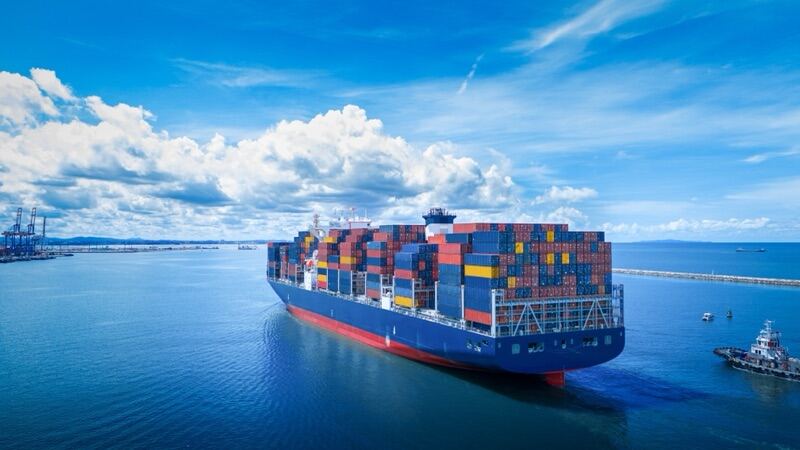
A European brand buying from Asia orders the season roughly five months before it sells. That means guessing sizes, colours and volumes in November for a June rail. Get it wrong one way and the brand marks down the surplus at 30 to 50 percent off. Get it wrong the other way and it sells out in week three and watches demand walk to a competitor. Then add six weeks on the water, the 12 percent EU duty on apparel from a country without a trade preference, and the working capital tied up in a container somewhere near Suez. None of that appears on the Asian quote. All of it lands on the buyer's margin.
So the honest comparison is not 4.20 euros against 6.10 euros. It is what a season costs the brand when it can reorder in ten days against what it costs when it cannot. Skype did the same trick to the telecom companies: it stopped arguing about the price per minute and changed what a call was. Your speed changes what an order is.
How to put the speed on the quote
A quote is where the argument is won or lost, so the speed has to be visible on the page in numbers the buyer can check. We suggest three lines that most Turkish sellers currently leave out.
- Landed price, delivered. Quote DAP to the buyer's warehouse with the 0 percent Customs Union duty spelled out beside the 12 percent a Chinese garment pays. Do the per-unit maths for them.
- Reorder lead time. Separate the first-run lead time from the repeat lead time. A 21-day first run and a 10-day repeat on held fabric is a different product from a single "45 days" figure.
- Minimum reorder quantity. If you will re-cut 300 pieces of a winning style, say so. Asian quotes rarely go below 1,000 per colour, and buyers know it.
Put those three next to the unit price and the 1.90 euro gap starts to look like what it is: an insurance premium the brand is glad to pay.
On Lalaaji, buyers post what they need and verified factories quote it. A quote that shows delivered price, repeat lead time and reorder minimum wins briefs that a bare unit price loses. See how RFQs reach sellers.
Where the speed premium is worth the most
Speed is worth more in some categories than others, and a smart seller aims the pitch there. Fashion-led knits and jersey basics with colour risk, denim with a wash that trends, and any style a brand sells online with a short drop cycle all reward the ten-day repeat. Long-life basics with stable demand do not. A brand buying 50,000 plain white tees knows exactly how many it will sell and has no reason to pay for agility. Let that order go to Asia and take the one with the colour risk. It pays better and it comes back every season.
The ten-day repeat depends on held fabric
The ten-day repeat only exists if the fabric is already in Turkey. That is the quiet advantage of a country that spins, knits and finishes at scale: you can hold greige or dyed fabric for a running style and cut on demand. Offer the buyer a fabric commitment on their best three styles and you have turned yourself from a supplier into a stock position they can draw on. Most Asian factories cannot offer that at any price, because the fabric is coming from somewhere else.
Do not discount the speed away
The thing that undoes all of this is a seller who quotes the speed and then, under pressure, matches the Asian price anyway. The moment you do that, you have told the buyer the speed was free. Hold the number. Explain what it buys. Some buyers will still go to Asia, and those are the buyers who were only ever going to buy on price. The nearshoring shift of the last few years happened because brands learned the price of slow. That lesson is your margin.
The wider case for Turkey's position, the Customs Union and the truck routes, is in why Turkish apparel factories have a head start in Europe. If you want to see how a buyer does the full landed calculation, read landed cost for apparel into the EU, and for the smaller brands who value speed most, see how small European brands search for Turkish factories.
Want European brands who pay for speed to find your factory? List your factory on Lalaaji.
Your questions answered
Why is a Turkish garment more expensive per unit than one from Bangladesh or Vietnam?
Labour and energy cost more in Turkey, so the sewn price per piece is higher. The buyer's total season cost is often lower, because Turkey ships duty-free into the EU, delivers by truck in four to six days, and can repeat a style in about ten days on held fabric, which cuts markdowns and stock-outs.
What should a Turkish factory show on a quote besides the unit price?
Three lines: the delivered price to the buyer's warehouse with the 0 percent Customs Union duty next to the 12 percent a Chinese garment pays, the repeat lead time separate from the first-run lead time, and the minimum reorder quantity per style.
Which orders reward nearshoring speed the most?
Styles with colour or trend risk, such as fashion knits, washed denim and online drops with short cycles. Stable basics ordered in large volumes do not reward speed and usually go to the cheapest supplier.