











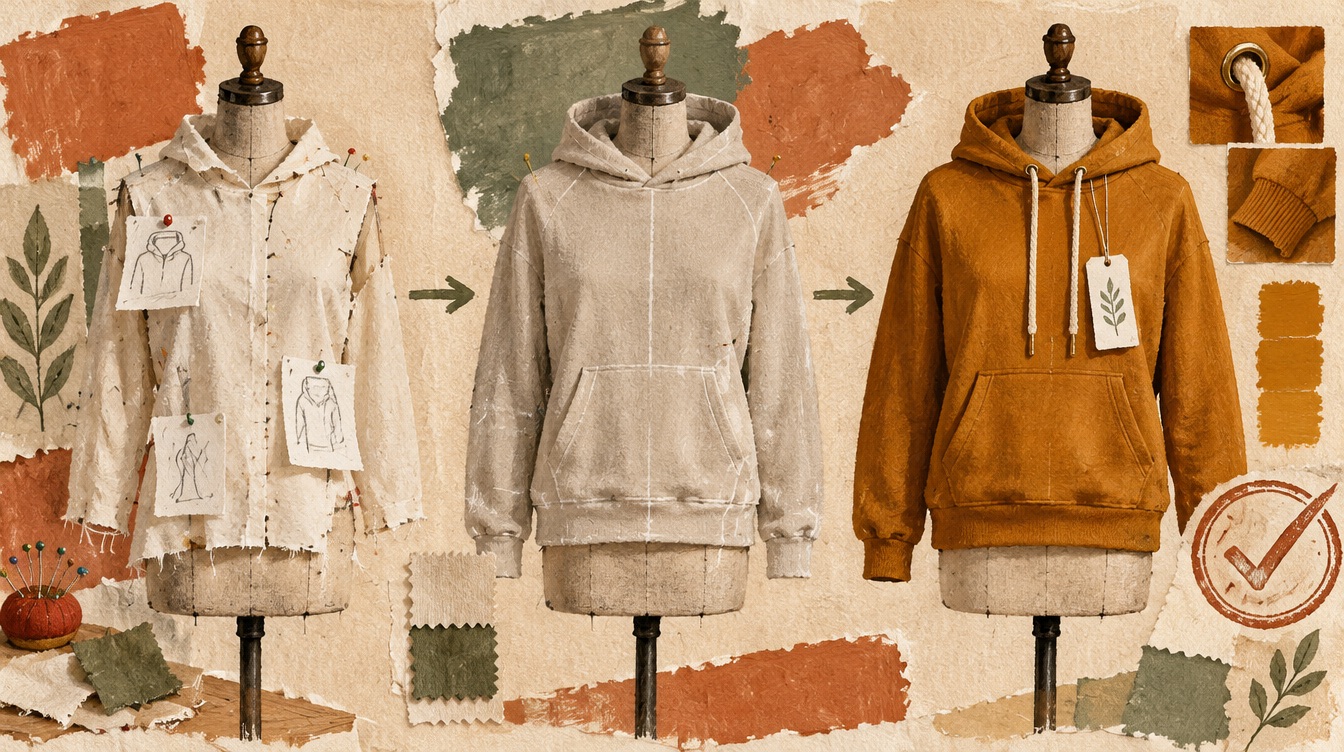
Samples are how you and a factory agree on what is going to be made before a thousand of them exist. Each stage checks something different, and the problem a skipped stage would have caught still turns up later, in bulk, when it costs far more to fix. Skipping a stage rarely saves time.
Below are the stages in order, what to check at each, and roughly what they cost in time and money. Factories don't all use the same names, so agree the terms at the start of the order.
The seven sample stages at a glance
| Stage | Purpose | Fabric | Typical time | Who usually pays |
|---|---|---|---|---|
| Proto (first sample) | Check the design and construction work | Similar fabric if the real one isn't available | 1 to 3 weeks | Buyer |
| Fit sample | Get the fit right in the base size | Correct or very close fabric | 1 to 2 weeks per round | Buyer, often credited against bulk |
| Size set | Check grading across sizes | Correct fabric | 1 to 2 weeks | Buyer or shared |
| Salesman / photo samples (optional) | Selling, photography, pre-orders | Correct fabric and trims | 2 to 3 weeks | Buyer |
| Pre-production (PP) sample | Final sign-off on everything | Bulk fabric, bulk trims | 1 to 2 weeks | Usually factory |
| Top-of-production (TOP) | Confirm bulk matches the PP sample | Bulk | Taken from the line | Factory |
| Shipment sample | Record of what shipped | Bulk | At packing | Factory |
Proto sample
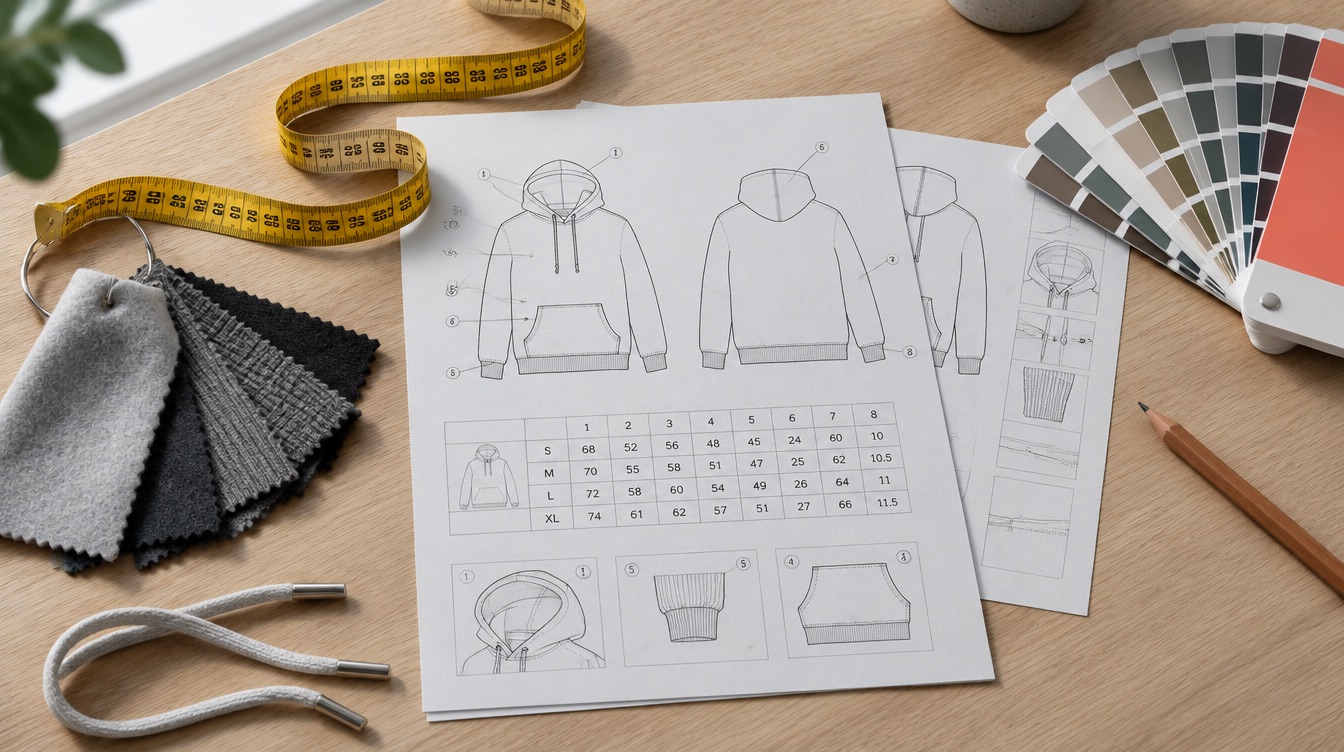
The proto is the first physical version of your design, made from your tech pack or reference garment. The factory may use a similar fabric if the one you specified needs to be ordered or dyed.
Check that the design reads correctly (panels, pockets, hood shape), that the construction is what you asked for, and that the factory has understood the brief. If you know they used a substitute fabric, leave fabric and colour comments for later and look at whether the factory followed your instructions. A proto that ignores half the tech pack tells you how bulk will go.
Fit sample
The fit sample is made in your base size, from the correct fabric or something very close, and tried on a real person or a fit model as well as measured flat on a table. Record comments against each point of measure: "chest +2 cm, body length -1.5 cm, hood depth +1 cm".
Most styles take one or two fit rounds. More than three usually means the base pattern was wrong or the comments weren't specific enough. Vague comments are on you, and each one can cost a fit round of one to two weeks. Send photos of the sample on the body, front, side and back, along with your measurements.
Size set
The size set is one sample in each size, or in the smallest, base and largest sizes. It checks that the grading works: an XS that is wearable and a 2XL that isn't just a scaled-up medium. Brands that skip the size set often find out in bulk that the largest size has sleeves 4 cm too long.
Salesman or photo samples
Salesman samples are optional. If you sell to retailers before production or need samples for a photo shoot, order them after fit approval, in the right colours and with final branding. Ask for them at the same time as the PP sample to save a round of shipping.
Pre-production (PP) sample
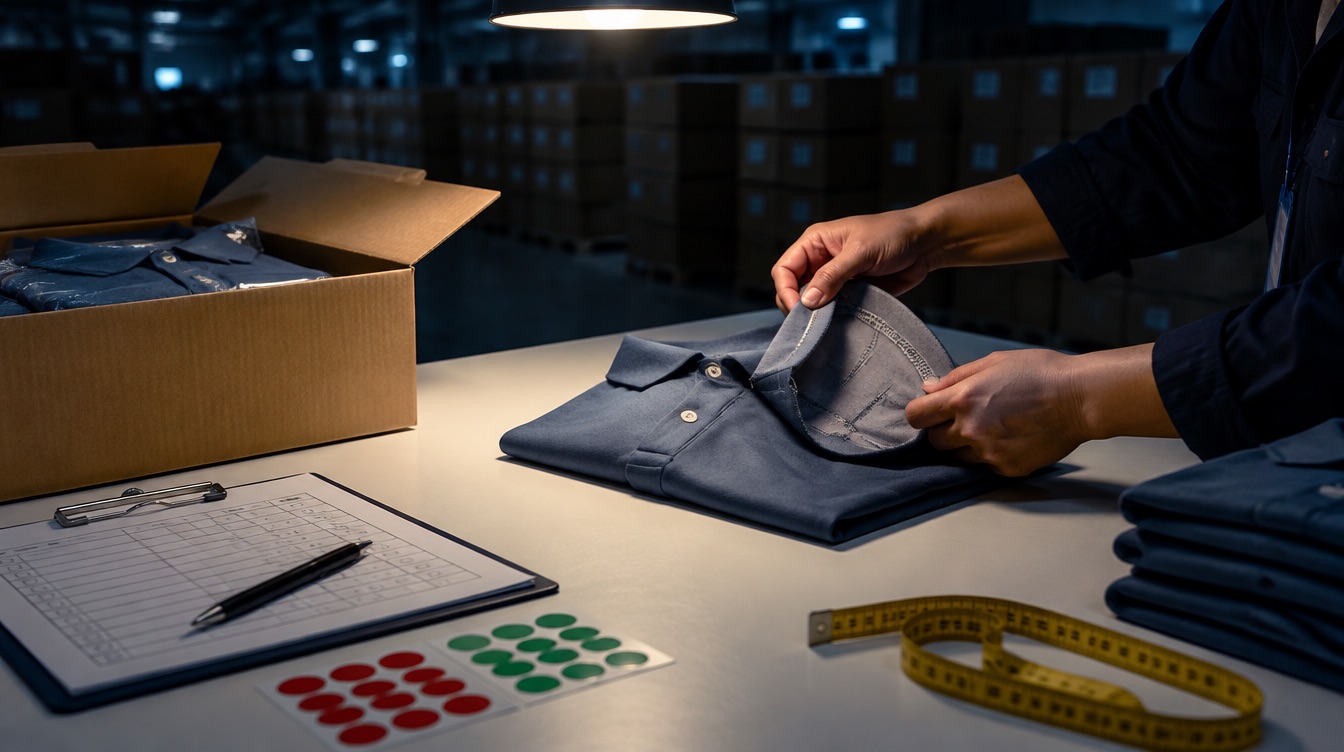
The PP sample matters more than any other sample in this guide. The factory makes it from the bulk fabric, with bulk trims, labels, prints and packing, exactly as production will run. When you approve it, you are telling the factory "make exactly this."
Just like a publisher signs the final proof before the print run starts, you sign the PP sample before the factory cuts bulk. Every garment after that gets judged against it.
Check it against the tech pack line by line:
- Fabric composition, weight and hand feel compared with your approved fabric swatch or lab dip
- Colour, in daylight and under store lighting, against the approved lab dip or strike-off
- Every measurement against spec, within tolerance
- Print or embroidery size, placement and colours
- Labels, care symbols, country of origin, hangtags and barcodes
- Packing: folding, polybag, warnings, carton marks
Sign and return one PP sample to the factory and keep the other. The factory works to the signed sample, and an inspector compares bulk against it.
PP approval is also the natural payment milestone. A common structure is deposit at PP approval, balance after final inspection. On Lalaaji, orders paid through the platform release funds at milestones like these; see payment protection.
Top-of-production (TOP) sample
The TOP sample is a few pieces pulled from the first finished garments off the production line, sent to you or checked by an inspector. If it matches the PP sample, bulk is on track. If it doesn't, you have found the problem with most of the order still to be sewn. Fixing it will never be cheaper.
Shipment sample
Keep one or two pieces from the packed cartons as a record of what was shipped. If a dispute about a later order or a customer complaint comes up, the shipment sample is your reference.
How long sampling takes
The big question is how long all of this takes before you have anything to sell. For a straightforward cut-and-sew garment with one fit round, proto to approved PP usually takes four to eight weeks, including courier time. Custom fabrics, lab dips and special trims add time. A launch date set before the PP sample is approved is a guess.
You can cut the time by:
- Sending a complete tech pack on day one
- Approving lab dips and print strike-offs in parallel with fit
- Writing fit comments as measurements, such as "chest +2 cm"
- Asking for PP and salesman samples together
- Using one courier account and sending your DHL or FedEx account number to the factory
What samples cost
Sampling fees vary by country, complexity and factory, and the courier is often the bigger cost (yes, really). Many factories credit sampling fees against the bulk order once you place it, so ask for that in writing. Expect to pay for proto and fit rounds yourself. PP and TOP samples are normally the factory's cost, because they are part of producing your order.
Sending the same brief to several factories and paying for samples from two is a good way to compare quality before you commit. Our RFQ guide explains how to brief them consistently.
What happens after you approve the PP sample
Once the PP sample is signed, production starts, and the next checkpoint is the TOP sample. The final check before shipment is usually an AQL inspection; here is how AQL inspection works for garments.
Your questions answered
What is a PP sample in garment production?
A pre-production (PP) sample is made from bulk fabric and trims exactly as production will run. Once the buyer approves and signs it, it is the reference standard for the whole order and for inspection.
What is the difference between a fit sample and a PP sample?
A fit sample is for getting measurements and fit right, and may not use final trims or prints. A PP sample is complete, made with bulk materials, and approving it authorises production.
What is a TOP sample?
A top-of-production sample is taken from the first finished garments on the production line, to confirm that bulk matches the approved PP sample before most of the order is made.
How many sample rounds are normal?
One proto, one or two fit rounds, a size set, and a PP sample is typical for a new style. Repeat styles with an existing approved pattern can often go straight to PP.